Wolf · Seattle, WA
Wolf ranges, dual fuel and all-gas
Dual-fuel and all-gas Wolf ranges — ignition, burner output, oven cavity and control faults handled on one visit.
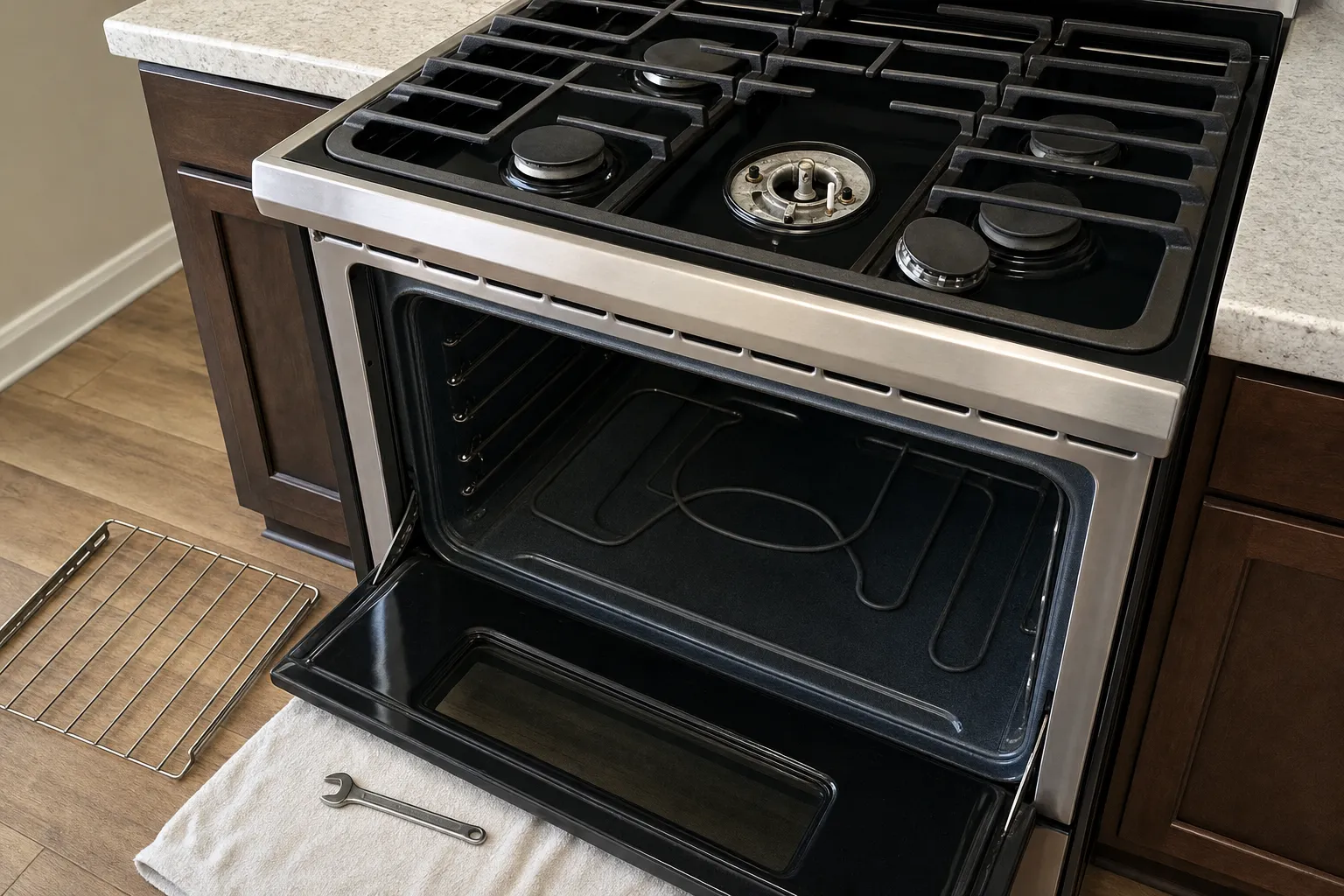
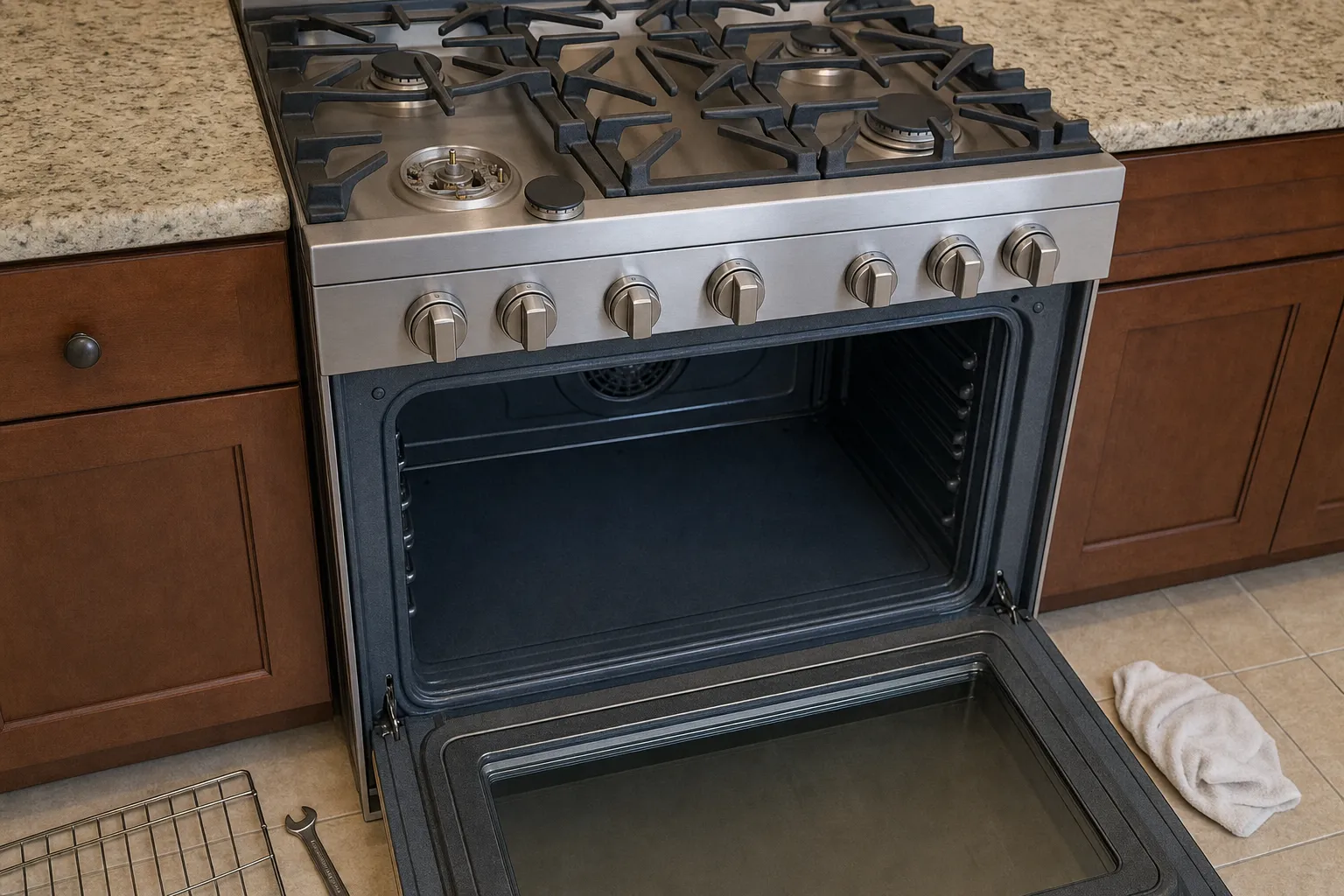
A Wolf range usually reports its fault one of two ways: a burner that clicks and never catches, or an oven side that goes dark while the cooktop carries on. We work from the supply inward — gas arriving, power arriving — and only then to the part. What that part tends to cost is laid out on the range repair cost page; if the complaint is clicking, the field note on a burner that clicks but will not light has the checks worth making first. Whether old bungalow wiring can carry a dual fuel range is the question North Seattle adds to the list.
What people call about
The complaints, word for word
- Left front burner clicks and clicks but never lights
- Cooktop works but the oven side went dead after a power flicker
- Flame will not hold a low simmer — it either roars or blows out
- Griddle plate scorches on one half and stays cold on the other
On the visit
What actually gets measured
- Gas pressure at the range with the burners off and again with them lit
- Spark at each electrode, and whether the flame is sensed once it catches
- Oven ignition and relight on the bake and broil burners, or the elements on dual fuel
- Low-flame behaviour burner by burner, down to the simmer setting
The all-gas range, and what people call a gas stove
Wolf builds the cooking range two ways. A dual fuel range puts a gas cooktop over an electric oven; an all-gas range, the GR series, burns gas in the oven as well. Someone ringing about a Wolf gas stove almost always means one of those two, and which it is decides the first question: on an all-gas range the oven burner is lit by a spark igniter, so an oven that will not heat is an ignition question, while on dual fuel the same complaint points at an element, the sensor or the circuit feeding them.
Above the oven the two are alike. Sealed burners, an electrode beside each one, a valve and an orifice behind every knob. So a gas range repair in a Seattle kitchen normally starts at the burner you rang about, runs across the others to see whether the fault is shared, and only then goes to the oven.
What it costs
Six published bands, and your figure is fixed before work starts
One $89 charge covers getting a technician to your kitchen and diagnosing the fault in full; approve the repair and that $89 comes off its price.
A band is wide because the part and the hours both shift with the model and the fault. The diagnosis turns it into one figure for parts and labour together, and nothing is dismantled until you have agreed to that figure.
- Igniter or spark module
- $170–$420
- Burner valve or orifice service
- $230–$640
- Oven thermostat or sensor calibration
- $220–$460
- Convection fan or motor
- $280–$670
- Control board or touch panel
- $440–$950
- Door hinge, glass or seal
- $280–$690
Set against a new range Buying new instead: $8,010–$16,950 for a comparable professional range, before installation and ventilation work. Even the top band sits far below that, which is why a repair usually comes first.
In their words
Told by the people who paid for them
4.9 / 51,673 reviews
Simmer on the front burner had been useless since we moved in. He set the low-flame screw properly and read the manifold pressure. It holds a low flame now. Small job, treated seriously.
Russ K.
Clicking carried on well after the flame was up, all night if you let it. A spark switch under the knob had stuck closed from an old boil-over. Quiet ever since.
Zeke H.
Two burners quit lighting the week we had people over. Another shop had already quoted a whole new spark module. It was one cracked igniter and a spilled-on switch, and he showed me the burnt contact.
Kirsti M.
Book it
Tell us the model number and what it is doing
Our kitchen visits keep to 8:00 am – 8:00 pm, seven days, across the city and past its edges, while (206) 339-4211 stays staffed 24/7. The $89 diagnosis is known before anyone sets off, and it is credited back once you approve the repair.